
Submission to the Pension Funding Framework Review and other issues affecting pension plans

The following submission to the province, entitled “Pension Funding Framework Review and other issues affecting pension plans”, was made by CUPE NS President Nan McFadgen and the CUPE NS Pension Committee on November 10, 2017. CUPE Nova Scotia is disappointed that the Pension Funding Framework Review discussion paper fails to address the top concerns of the members and beneficiaries of DB pension plans; ensuring the pension promise is delivered and benefits are protected. The discussion paper appears driven by employer concerns to reduce their pension commitments as all of the “options” proposed shift the pension plan risk away from employers and on to pension plan members and retirees. This is not a balanced or fair approach to crafting Nova Scotia’s public policy for DB pension plans. CUPE is strongly opposed to the proposal to allow the retroactive conversion of DB pension plans to TB pension plans. This would destroy the long-held … Read more…
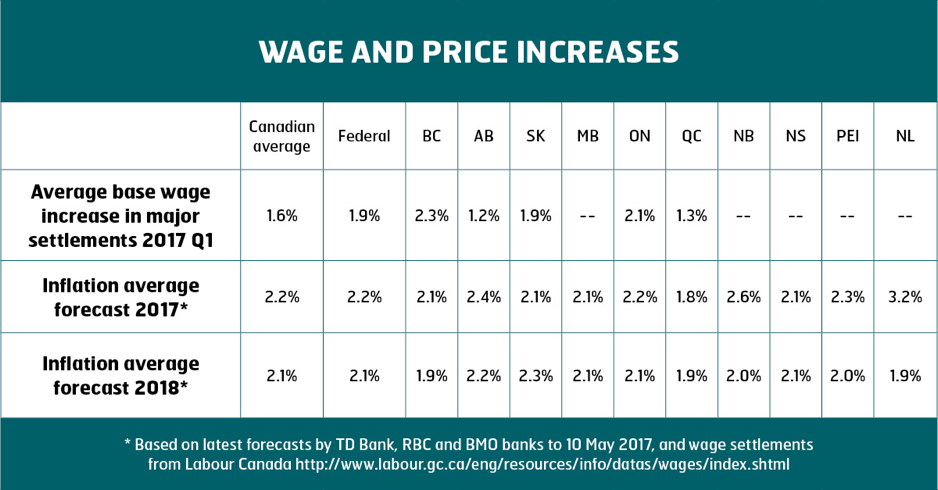

Chart - Wage and Price Increases

Public sector wages not on pace with inflation

Governments in Nova Scotia, Newfoundland and Labrador, Manitoba, and Saskatchewan are now either imposing or pushing wage freezes and/or cuts on public sector workers in their provinces. Over the past seven years, base wage increases in collective agreements for public sector workers across Canada averaged just 1.4% year, while consumer price inflation increased by an average of 1.7% annually. Nationally, this adds up to a real wage decline of more than 2% since 2009. In Nova Scotia, the loss of wages and retirement income is distressing. Here is the economic impact of one year of a four-year collective agreement imposed on public sector workers by the Liberal government. $322 million lower GDP in the fourth year Equal to almost 0.7% (almost a full percentage point lower GDP) 1,500 non-government jobs lost in the fourth year Mostly private sector jobs lost from indirect and induced impacts of lower spending by public sector … Read more…

A tale of two budgets – Alberta and Saskatchewan

There is no better example of budgets being about political choices than a comparison of the Alberta and Saskatchewan budgets. Alberta’s budget invested in infrastructure and public services while Saskatchewan went with cuts and tax hikes for everyone except corporations (who got a tax break). Alberta’s reliance on revenue from oil and gas has had a ‘boom and bust’ effect on government revenue for decades. When oil and gas prices were high, the province racked up huge surpluses, and when prices dropped, deficits appeared. During the 44-year reign of the Alberta Conservatives, the approach to low resource prices was to slash public services and raise user fees and taxes. The Ralph Klein government cut public sector wages by five per cent, laid off public sector workers and privatized public work, and cut funding to health care and education. Health care premiums were hiked, alcohol taxes raised, and Albertans faced a wide range … Read more…