
Letter: Childhood educators in peril

The following letter was sent to Minister of Education and Early Childhood Development Zach Churchill by Michelle Lohnes on behalf of early childhood educators, members of CUPE 4745. The later was also published in the Chronicle Herald on November 11, 2017.  Over the last few days, we have noticed that the Department of Education and Early Childhood Development has provided surveys to be completed by child-care centre directors, board members and parents, to gather information about the impact of pre-primary programs that began in September. The implementation of the pre-primary program has had a huge, negative impact on early childhood educators working in child-care centres across the province. Many of us are concerned about our future employment due to underfunding and the decline of enrolment in child-care centres. Our sector was already experiencing a recruitment and retention problem and these new programs have made a difficult situation even more challenging. The … Read more…
Submission to the Pension Funding Framework Review and other issues affecting pension plans

The following submission to the province, entitled “Pension Funding Framework Review and other issues affecting pension plans”, was made by CUPE NS President Nan McFadgen and the CUPE NS Pension Committee on November 10, 2017. CUPE Nova Scotia is disappointed that the Pension Funding Framework Review discussion paper fails to address the top concerns of the members and beneficiaries of DB pension plans; ensuring the pension promise is delivered and benefits are protected. The discussion paper appears driven by employer concerns to reduce their pension commitments as all of the “options” proposed shift the pension plan risk away from employers and on to pension plan members and retirees. This is not a balanced or fair approach to crafting Nova Scotia’s public policy for DB pension plans. CUPE is strongly opposed to the proposal to allow the retroactive conversion of DB pension plans to TB pension plans. This would destroy the long-held … Read more…

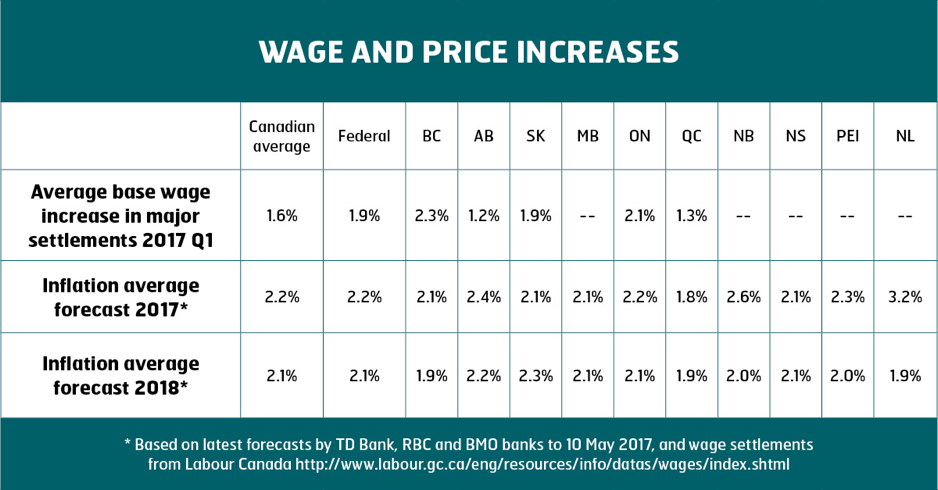
Chart - Wage and Price Increases

Public sector wages not on pace with inflation

Governments in Nova Scotia, Newfoundland and Labrador, Manitoba, and Saskatchewan are now either imposing or pushing wage freezes and/or cuts on public sector workers in their provinces. Over the past seven years, base wage increases in collective agreements for public sector workers across Canada averaged just 1.4% year, while consumer price inflation increased by an average of 1.7% annually. Nationally, this adds up to a real wage decline of more than 2% since 2009. In Nova Scotia, the loss of wages and retirement income is distressing. Here is the economic impact of one year of a four-year collective agreement imposed on public sector workers by the Liberal government. $322 million lower GDP in the fourth year Equal to almost 0.7% (almost a full percentage point lower GDP) 1,500 non-government jobs lost in the fourth year Mostly private sector jobs lost from indirect and induced impacts of lower spending by public sector … Read more…