
Living wages

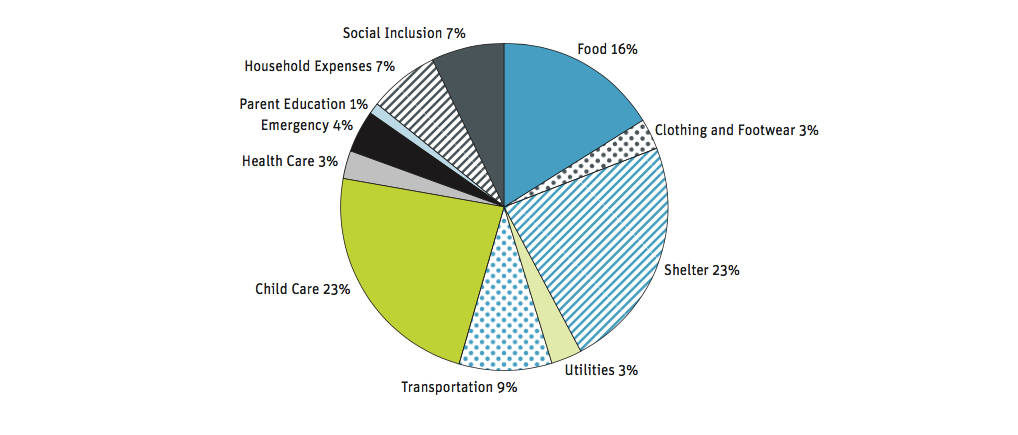
“Imagine an Antigonish where fire departments have all the volunteers that they need, people move home from out west because they can get a good paying job here, families are reunited. People are able to take time to volunteer and help others within the community and continue the social action movements that Antigonish is known for.This would be ideal; however, this cannot happen without income security and appropriate social policies.” “A living wage is one component of achieving this vision. For example, a living wage would allow people to seek out jobs in the area, stimulating the economy and strengthening social capital. People would be able to take time to volunteer as they would not need to work an extra job just to put food on the table. Antigonish would flourish, both on an individual and community level. The economy would be stimulated and grow and businesses would prosper. There … Read more…


Swedish secrets to a strong economy

It may be at odds with conventional economic views, but Sweden is showing that strong unions and greater equality are the recipe for strong economic growth. Sweden’s economy has grown an average of 3.5 per cent annually since the Social Democratic Party formed government in 2014 – well above Canada and other European countries. This has been associated with strong job growth, rising real wages, rising productivity, low inflation, high tax rates, increased social spending, and balanced budgets. Sweden’s finance minister Magdalena Andersson, an economist, sums up their success in three points: “It’s the jobs, it’s our welfare and it’s our redistribution,” she says. Sweden also has the highest rate of labour force participation in the European Union thanks to publicly-funded parental leave and affordable daycare, which make it easier for all parents to work.

Chris Melanson, CUPE 5047 president

ECEs will continue to deliver quality play-based learning

CUPE School Board Sector replies to NSTU statement The Canadian Union of Public Employees (CUPE), representing early learning educators (ECE) in Nova Scotia, disagrees with the recent statement made by the Nova Scotia Teachers’ Union (NSTU) that teachers should be working in pre-primary classrooms. “CUPE has supported NSTU in the past and will continue to do so,” says Grant Dart, CUPE school board sector coordinator. “However, we strongly disagree with their position paper.” From CUPE’s perspective, the pre-primary program is best served by having only ECEs in those classrooms because: ECEs are trained exclusively in play-based learning (teachers are not). Early childhood educators are trained, skilled professionals. ECEs understand the value of play-based learning better than anyone. In Nova Scotia, ECEs have successfully delivered the program through the Halifax Regional School Board for approximately 13 years. ECEs are now delivering play-based learning through all Nova Scotia school boards, without issue … Read more…